Buying Used Commercial Laser Tag Equipment
Before buying used commercial laser tag equipment, identify every device, confirm the complete system will work together and ask the manufacturer what support and software access the next owner can obtain. Then run a recorded inspection on the actual units being sold. A familiar shell, an application download or a successful power-on does not establish a working commercial fleet.
A useful used-equipment purchase leaves you with enough complete player sets to sell your planned sessions, a way to configure them and a realistic route back into service when something fails. Start with that outcome and work back to the seller's inventory.
Where to buy or sell used laser tag equipment
The Used Laser Tag Equipment Marketplace on Laser Tag Forum has dedicated sections for second-hand equipment of different types and manufacturers. Use Buy to post an equipment request and Sell to list equipment you are offering.
Write your advert in English, following the forum rules. Include the country, model and generation, complete working-set count, known faults, actual photographs, asking price and currency, and the proposed collection or shipping arrangements. Separate working devices from incomplete sets and repair items so readers can compare the offer.
When you find an offer, request the inventory and use the checks below before agreeing a purchase. The listing is the seller's description; confirm compatibility and support for the actual equipment.
Identify the fleet before discussing the discount
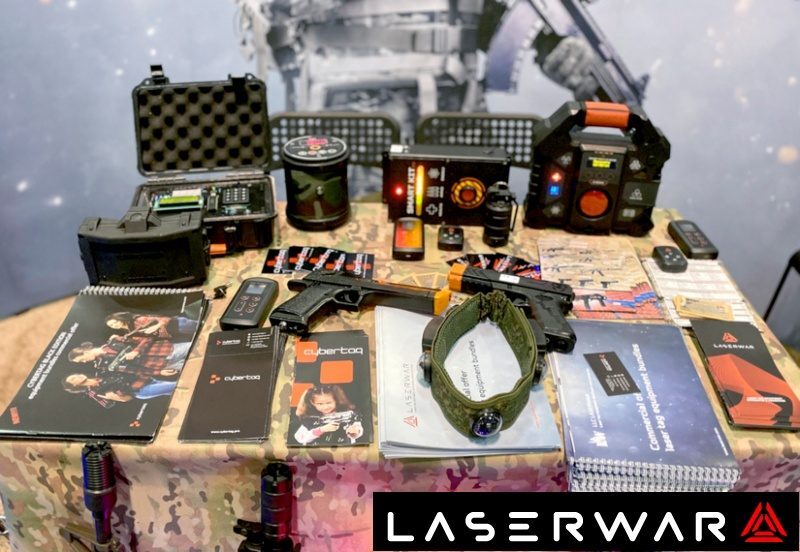
Ask for an inventory showing each tagger, headband or vest, controller, charger, game device and network component. Record model, hardware generation, serial number where present, quantity, visible condition and the accessories supplied. Ask the seller to photograph labels and connectors clearly. Include the application and firmware versions currently used.
Keep three counts: complete working player sets, incomplete sets and units awaiting diagnosis. For a proposed 12-player operation with two complete reserves, you need 14 working tagger-and-sensor arrangements. A listing of 14 taggers and 10 usable sensors supports only 10 complete sets until the missing pieces are sourced and checked. That arithmetic is a buying example, not a LASERWAR standard package.
Use the manufacturer's generation comparison to identify the questions to ask. Confirm the exact equipment with technical support; a general comparison page does not settle compatibility for an individual second-hand lot.
Check compatibility at five separate points
Ask for written confirmation against the inventory, with exceptions named by device. One statement that a fleet is “compatible” is too broad to price missing parts or plan sessions.
| Connection | What to verify before payment | Evidence to keep |
|---|---|---|
| Tagger and player sensors | Which listed headband or vest pairs with each tagger and generation? | Pairing and hit-registration demonstration for each intended arrangement |
| Game control | Which controller or application can configure and start all units together? | Application version, settings and a complete session on the offered fleet |
| Charging | Which supplied charger and battery arrangement belongs to each device? | Labels, connectors, instructions and a charging demonstration |
| Scenario devices | Which flags, respawn props or other devices work in the intended game? | Exact models and an observed interaction during the demonstration |
| Results and expansion | Which statistics are available, and which additional units could join this installation? | A saved sample report and the manufacturer's response for the proposed additions |
Test the full fleet together. Two devices working separately does not prove that every item in a mixed lot can share one game. Identify unsupported combinations before treating them as playable capacity.
Establish the next owner's software access
Ask the manufacturer or authorized software provider which applications, accounts, activation steps and permissions the buyer needs. State that the equipment is changing owner. Obtain a clear answer about whether a new account, activation, subscription or other payment is required. A public installer proves that a file is available; it does not prove that an account, service or commercial entitlement transfers.
Have the seller demonstrate configuration, game start, player assignment and the results workflow on the offered hardware. Ask what depends on the local equipment network and what depends on internet access. Record what happens when the intended connection is unavailable and how the system returns to service. Use the ALPHATAG and X-Gen workflow guide when those generations are involved.
Arrange an authorized handover of access. The buyer should receive their own approved access and operating records; the seller should remove unrelated customer and player data through the supported process. Record any software or account issue as unresolved until the provider confirms it.
Inspect condition and record a repeatable trial
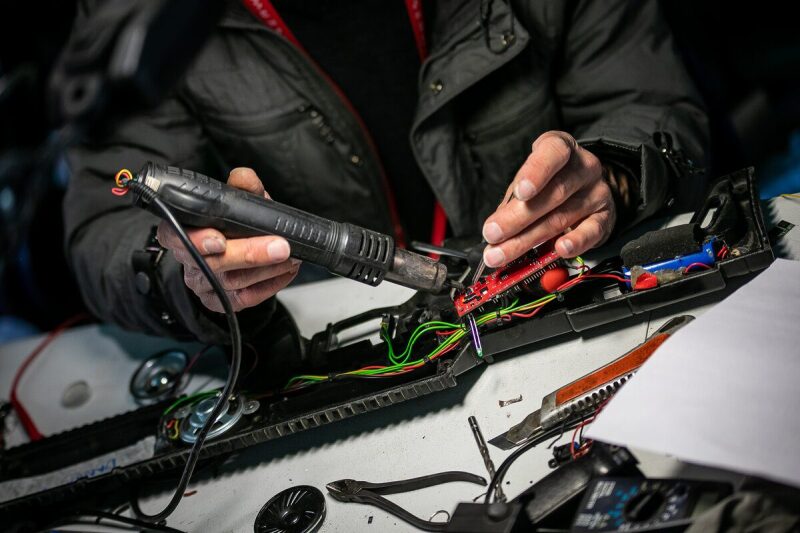
Inspect housings, straps, sensor windows, connectors and controls. Ask about storage, repairs, battery replacement and exposure to moisture. Record symptoms and photographs against unit IDs. Ask which replacement parts are currently obtainable, their prices and their lead times.
Follow the supplied charging instructions. If a battery or charger is damaged, swollen, overheating or otherwise abnormal, stop that unit's trial and ask support for the next step. An unsafe or unknown battery is a repair item in the budget.
Agree a trial that resembles the job you will ask the equipment to do. Include ordinary indoor lighting, the planned barriers, representative player movements, simultaneous operation and the busiest intended game mode. For outdoor use, add the actual light and field conditions. Write down who will observe the trial, what counts as a pass and what happens if a unit fails.
| Trial stage | Record | Purchase decision |
|---|---|---|
| Inventory and charging | Unit IDs, chargers used, charge completion and exceptions | Identify incomplete or unavailable sets |
| Pairing and hit detection | Sensor arrangement, settings and observed missed or unexpected registrations | Diagnose exceptions; repeat the agreed check after correction |
| Control and results | Start/reset workflow, player assignments and saved output | Confirm the operation you intend to sell |
| Working period | Start/end times, play and idle pattern, warnings and units removed | Compare observed endurance with your schedule |
| Spare-set swap | Time and steps needed to replace a player set | Decide whether your reserve process is workable |
This is a proposed inspection method, not a certification or a report of completed equipment tests. A brief demonstration cannot establish all-day battery endurance. If the sale cannot accommodate a representative working period, keep battery condition and runtime as open cost items.
Ask what service remains available
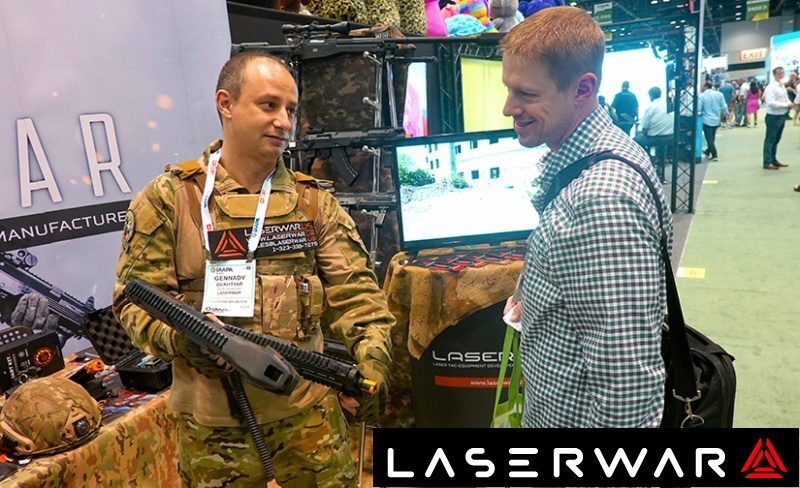
Send the equipment list and serial numbers to the manufacturer before committing. Ask whether it can support these models, which parts it can supply and which repairs require return. Confirm the repair destination, contact hours, diagnosis process and any transfer conditions for warranty coverage.
For LASERWAR equipment, the published warranty policy makes business warranty coverage dependent on the written terms for the order. Do not assume that buying a used unit restarts a warranty or transfers the first buyer's coverage. Obtain the applicable answer for the specific units and keep it with the sale records.
Calculate the cost of a usable fleet
Build a startup cash budget from the sale price plus known missing equipment, approved repairs, battery or charger work, required software access, training and delivery. Add a separate allowance for unresolved items; label it as your assumption. Ask for actual quotes to replace it.
An illustrative lot costs $6,000. Missing sensors cost an assumed $800, approved repair and battery work $600, software and training $300, and transport $400. The equipment-ready budget is $8,100 before any applicable import charges or taxes. If that produces 12 complete sets and you hold two in reserve, you can sell 10 player places per round: $8,100 ÷ 10 = $810 per active place. None of these inputs is a supplier quote or an observed resale price.
Compare a new-equipment offer using the same active player count, reserve level, delivery destination and cost period. For recurring care and later replacement, continue with the five-year ownership worksheet. Keep startup cash requirements separate from the longer cost model so the same expense is not counted twice.
Put unresolved items into the purchase decision
Make a short decision register: confirmed, waiting for evidence, or excluded from the working fleet. Assign a cost and a responsible person to each unresolved item. Base the final agreement on the recorded inventory, agreed condition, included access and the inspection process the parties accept.
If the manufacturer cannot identify the electronics, access cannot be arranged, or the trial cannot demonstrate your intended operation, the discount is not yet a usable business case. Ask for the missing evidence or reduce the working-fleet count and revise the budget.
Does every used LASERWAR device work with current equipment?
Compatibility must be confirmed for the exact models, generations, sensors, control equipment and firmware. Similar appearance alone is insufficient.
Is free software enough to run a second-hand fleet?
Check the complete workflow and the next owner's access. Hardware support, accounts and optional services may involve separate conditions even when an installer is publicly available.
How many spare sets should I buy?
Choose a reserve level from the sessions you promise, the repair route and the time required to restore a faulty unit. Count a reserve only when its compatible tagger and sensors are charged and ready together.
Before committing, send LASERWAR the equipment inventory and ask for a compatibility, parts and support review. Include your intended venue format and the number of player places you need to sell.


