Adding Laser Tag to a Paintball Field or Adventure Park
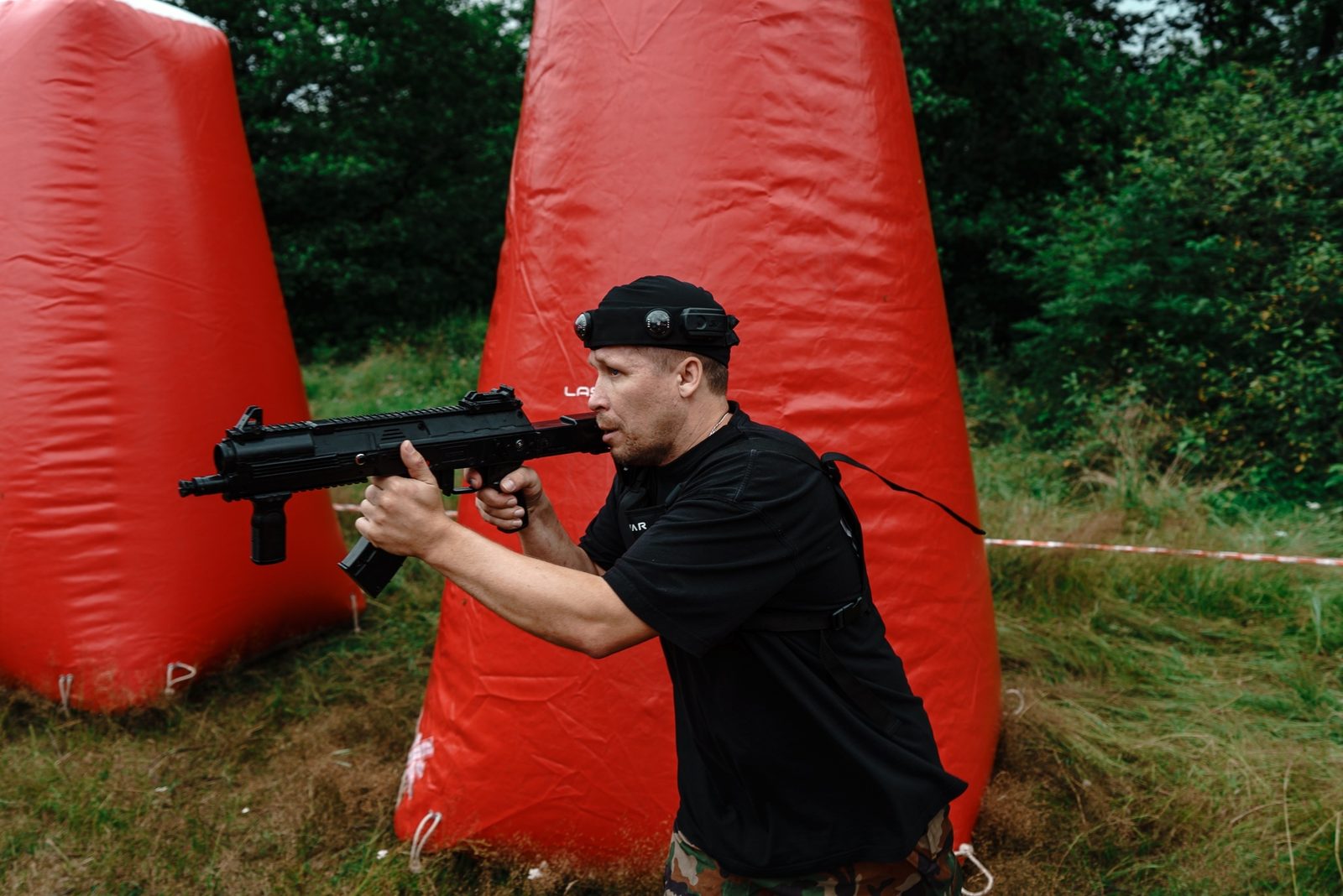
Adding laser tag to an existing paintball field or adventure park starts with a separate operating plan: who the activity serves, where it runs, which complete player sets you need and how staff will prepare each session. Existing land and customers can help the project, but they do not make the equipment, supervision or launch costs disappear.
Choose the customer and the session first
An additional attraction needs a clear place in your offer. It might serve visitors who want a different activity during a park visit, families booking a private session, or a group combining several activities. Decide which of those customers you want to serve first, then check whether the proposed equipment and staffing suit them.
Describe one session from arrival to departure. Include the briefing, fitting, play, equipment return, cleaning and reset. Decide whether customers book a private group or individual places in a scheduled game. This makes it possible to plan equipment and labor around an actual product rather than an undefined promise of more revenue.
For a wider launch checklist, use the existing laser tag business-plan guide. Here, the task is to identify the additional work and purchases required at a venue that already operates.
Audit what the existing venue can contribute
Walk the site with the operating team before sending a floor plan to a supplier. Some facilities may be shared; others need a separate arrangement. Record what is genuinely available during the hours you want to sell laser tag.
On a small screen, scroll the table horizontally to compare every column.
| Area | Potential shared resource | Question to resolve |
|---|---|---|
| Customer arrival | Parking, reception and check-in. | Can staff handle two activities arriving at the same time? |
| Playing space | A suitable existing zone and approved obstacles. | Is the layout suitable for the intended movement, boundaries and supervision? |
| Briefing and handover | A sheltered meeting area. | Can one group prepare while another returns equipment? |
| Equipment care | Secure storage, power and work space. | Is there enough space for charging, clean contact items and separate faulty equipment? |
| Staff and bookings | Existing instructors and reservation channels. | Which hours and duties are additional, and who owns each task? |
Keep paintball and laser tag separated through the site's approved operating and safety arrangements. Infrared hit registration does not remove the ordinary risks of movement, obstacles, weather or overlapping activities. Review the proposed layout and rules with the people responsible for the site, insurance and local requirements.
Build a complete equipment list
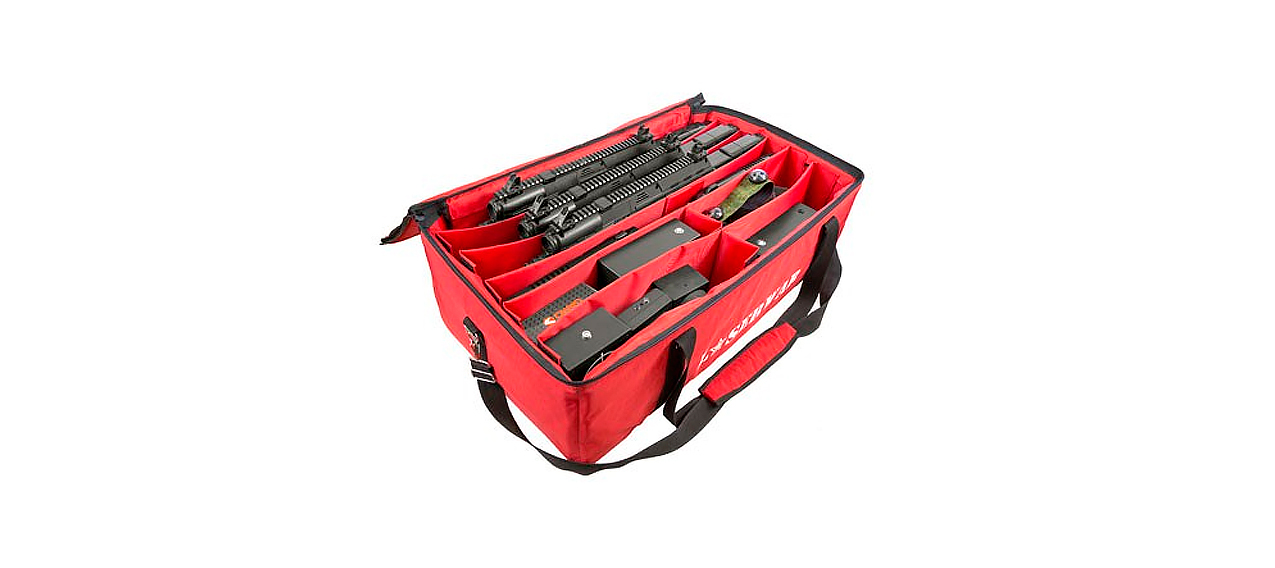
Use a worked planning example of 12 active players and two complete reserves. It requires 14 ready player configurations, with the matching taggers and wearables for the selected system. The reserve quantity is a starting assumption; adjust it to your bookings, service arrangements and condition records.
- Player equipment: the 14 complete configurations in the example, with any required accessories.
- Game control: the specified remote, application, operator device and any local networking equipment required for your chosen functions.
- Charging: compatible chargers, sufficient connections and an agreed charging schedule.
- Care and storage: clean cuffs or liners, protective cases, secure storage and the model-specific opening spares recommended by support.
- Field and scenarios: suitable boundaries and obstacles, plus only the electronic objectives needed for the opening games.
- Handover: training, documentation and an acceptance test using the full proposed setup.
Compare complete LASERWAR equipment packages against this list. Distinguish active places, reserves, included devices and optional extras. Ask the supplier to confirm the written contents and quote delivery and other applicable charges separately.
Run a realistic site demonstration
Test the equipment where you expect customers to play. For an outdoor project, use the outdoor equipment buyer's guide to prepare questions about daylight, optics, the playing area and environmental limits. An impressive indoor showroom demonstration cannot answer every outdoor operating question.
Ask the instructor to prepare teams, run the intended game, replace a complete set and reset for the next group. If you want live statistics, test the local connection, the display location and the software with the equipment proposed. Include a session without the reporting display if that is part of your fallback plan.
See an X-Generation setup and game-control demonstration
Calculate the additional session economics
Separate the purchase budget from the operating result of a session. Your launch budget needs supplier quotations for equipment and delivery, plus actual site, training and other startup costs. An operating example helps test assumptions; it does not establish demand or payback.
On a small screen, scroll the table horizontally to compare every column.
| Item | Example calculation | Amount |
|---|---|---|
| Ticket receipts | 12 paid players × $18 | $216 |
| Additional staff time | 3 total staff-hours × $22 | $66 |
| Cleaning and consumables | Assumed session allowance | $12 |
| Maintenance allocation | Assumed session allowance | $18 |
| Payment and marketing costs | Assumed session allowance | $20 |
| Contribution before omitted costs | $216 − $66 − $12 − $18 − $20 | $100 |
The $100 is not net profit. This simplified example excludes equipment purchase, financing, insurance, site overhead, taxes and other project-specific costs. Three staff-hours means combined labor: two staff working for 1.5 hours also total three staff-hours. Replace every assumed input with local figures and account for unsold places, canceled sessions and staff time outside the game.
Download the editable session-budget worksheet. First use it to check whether the session can cover its additional costs; then build the broader project budget using actual quotations.
Launch one repeatable offer, then review it
Run a staff rehearsal before opening bookings. Check that reception can explain the activity, instructors can fit and check the equipment, and the next group has a clear waiting area. Record the time for each handover rather than planning capacity from game time alone.
After the opening sessions, review paid attendance, preparation time, extra labor and faults. Ask visitors which parts of the activity were clear and which needed more explanation. Use those records to decide whether to add more player sets, a second session format or electronic objectives.
Keep an actual customer case separate from this planning example. A useful case records the venue, the purchased equipment, the operating changes and the results the operator can substantiate. The illustrative budget above should never be presented as the performance of a LASERWAR customer.
Questions from existing venue owners
Can laser tag use the same field as paintball?
A site may be able to allocate an existing playing area to laser tag, but the layout, condition, scheduling and separation of activities need review. Agree the boundaries, supervision and operating rules for the laser tag session. Do not assume that sharing land means the two activities can run together.
Do we need to buy everything again?
Start with an inventory of facilities and equipment you can actually use. Reception or sheltered briefing space may already be available. Laser tag still requires its own complete player configurations and the appropriate charging, control and care equipment. Compare the supplier's itemized proposal with the resources already on site.
How many sets should we start with?
Choose the active player count from the session you can book, brief and supervise, then add a suitable complete reserve. The 12-plus-two example is a planning exercise. Give LASERWAR your expected groups, busiest schedule and service arrangements so the opening configuration can be sized to your operation.
Get a proposal for adding laser tag to your venue
Send LASERWAR a site plan or photographs, your country, intended customers and proposed session size. Ask for an itemized equipment and launch proposal that distinguishes what you already have from the player sets, control equipment and accessories you need to buy.
- Business


