Indoor Laser Tag: Equipment, Venues and Planning
Guide updated · 15 October 2026
Indoor laser tag combines infrared game equipment, a purpose-built playing area and instructor-led team games. For a club owner, the important decisions are the equipment, the player journey and how the venue will work between sessions.
How indoor laser tag works
Players carry infrared taggers and wear compatible hit sensors. The game system registers hits and applies the rules configured by the operator: teams, health, ammunition, respawn and objectives depend on the chosen system and scenario.
The instructor explains the rules, checks how the equipment fits and starts the session. At the end, players can review the results supported by the equipment and software. A clear briefing and consistent rules matter as much as the visual theme.
Laser tag does not require paintballs or other projectiles. Players still move through a physical space, so the operator needs clear routes, stable obstacles and a briefing that suits the group.

Indoor or outdoor laser tag?
The formats share the same basic idea, but place different demands on the operator. Indoor games use a controlled venue. Outdoor games need a field plan that accounts for access, lighting, ground conditions and weather.
| Decision | Indoor venue | Outdoor field |
|---|---|---|
| Playing environment | Layout, lighting and waiting areas can be planned as one venue | Boundaries and usable cover depend on the site |
| Operating conditions | The building provides a controlled setting; ventilation and facilities still need planning | Weather, daylight and access affect the session |
| Equipment selection | Check handling, sensor fit, arena control and game feedback | Check the specific model's environmental limits and test detection on the field |
| Investment | Consider the premises, fit-out, equipment and ongoing operating costs | Consider site access, transport, field equipment and operating costs |
A professional system may suit more than one environment, but this must be checked for the actual equipment generation and configuration. “Indoor” does not mean that every venue must use the same vest or the same tagger.
Choose the whole game system
Compare complete playable configurations rather than a tagger alone. Ask what is included in each player set, which hit sensors it supports, how teams are configured and which charging equipment is required.
- Player equipment: weight, grip, sensor placement, fit and cleaning between groups.
- Operator control: preparation, start and stop controls, scenario settings and the results workflow.
- Field devices: objectives that support the game you intend to run and can be explained clearly.
- Charging and storage: compatible chargers, organised storage and a practical changeover routine.
- Service: access to instructions, software, replacement parts and support for the selected generation.
Use the LASERWAR software hub to find the available tools and the operating guide to plan equipment care. Confirm compatibility with LASERWAR before combining devices from different generations.

Plan the venue around the player journey
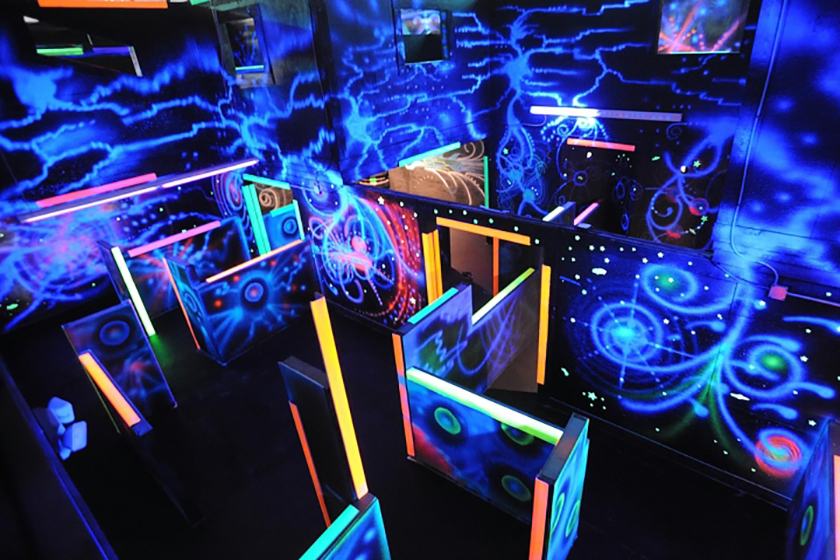
Guests need more than a playing maze. Plan arrival, waiting, briefing, equipment fitting, the game, equipment return and the presentation of results. Keep the preparation area distinct from active play so the next group can get ready without interrupting a session.
Inside the playing area, balance cover, sightlines and alternative routes. The layout should support several useful game patterns rather than forcing every session into one long corridor. Check how the instructor can observe play and intervene.
Use lighting, sound and decoration to support the chosen theme. Keep instructions, exits and movement routes clear. Building requirements, accessibility and the use of effects need assessment for the particular premises.
The arena planning guide explains the project stages and the information to prepare before requesting a layout.
Questions before you buy
How many players should the venue support?
Start with the audience, booking format and usable space. Agree the simultaneous player capacity with the equipment supplier and arena designer. Avoid treating the total floor area as the playable area.
Does an indoor venue guarantee year-round revenue?
It allows games in a controlled environment, but revenue still depends on demand, bookings, staffing, rent and the way sessions are organised. Build your plan around realistic local assumptions.
What should I send when asking for an equipment proposal?
Prepare a floor plan, photographs, the intended player age range, group size and game format. Include your country, launch schedule and any existing equipment.
Related guides: Starting a laser tag business · Building a laser tag arena · Equipment care and operation


